
Higher Education Student Affairs
Virtual Open House - Tuesday, August 4, 2026: 5-6:30 p.m.
Join us at one of our upcoming virtual Graduate School Open House events on Zoom! You'll have the opportunity to learn more about 91ŮÉñ, understand the Graduate School application process, and meet key program representatives.
The program emphasizes equity-minded practice, reflective leadership, and the integration of student development theory with real-world application across the broad landscape of higher education.
Learn more about the Graduate Certificate in Higher Ed., launching in Fall 2026.

HESA Program Video
What You'll Learn
Students progress through a cohort-based curriculum (39-credit-hours; 2-years for full-time students) that blends coursework with hands-on professional experience. Classes explore foundational and advanced topics such as student development, higher education structures, leadership, assessment, campus environments, and more. Throughout the program, students engage in supervised internships, paid assistantships, and applied projects that strengthen their skills in advising, program planning, student support, assessment, and more.
What Makes Our Program Different?
WCU's HESA Graduate Program is student-centered. Faculty practice what they teach by facilitating meaningful classroom experiences and engaging out-of-classroom professional experiences (Internships and Paid Graduate Assistantships). The HESA Grad Program is an intentionally small program (cohort-based) designed to: 1. Maximize faculty-student interaction, 2. foster significant scholarly learning experiences for students, and 3. offer guaranteed paid Graduate Assistantships (professional experience) to all qualified, full-time students.
Where You'll Go
Graduates gain comprehensive knowledge and experience to pursue professional employment within an institution of higher education or seek to continue to a doctoral program. Historically, the program has a 100% job obtainment rate for graduates who pursue jobs in Higher Education.
Examples of functional areas in which graduates work include, but are not limited to: Academic & Career Advising, Admissions & Recruitment, Athletics, Financial Aid, Fundraising, Mentoring & Retention Services, Orientation, Residential Living, Sevice Learning & Community Engagement, Sorority & Fraternity Life, Student Leadership & Involvement, Tutoring & Accessibility Services.
Next Steps
More 91ŮÉñ Our M.Ed. in Higher Education Student Affairs Program

The M.Ed. in Higher Education Student Affairs prepares emerging practitioners to work in a broad range of college and university settings. Students learn to foster holistic student development, engage in evidence-based practice, and integrate classroom learning with hands-on professional experience.
Applicants submit materials through the Graduate School. Full-Time applicants will also complete the Graduate Assistantship Forms within the admissions application.
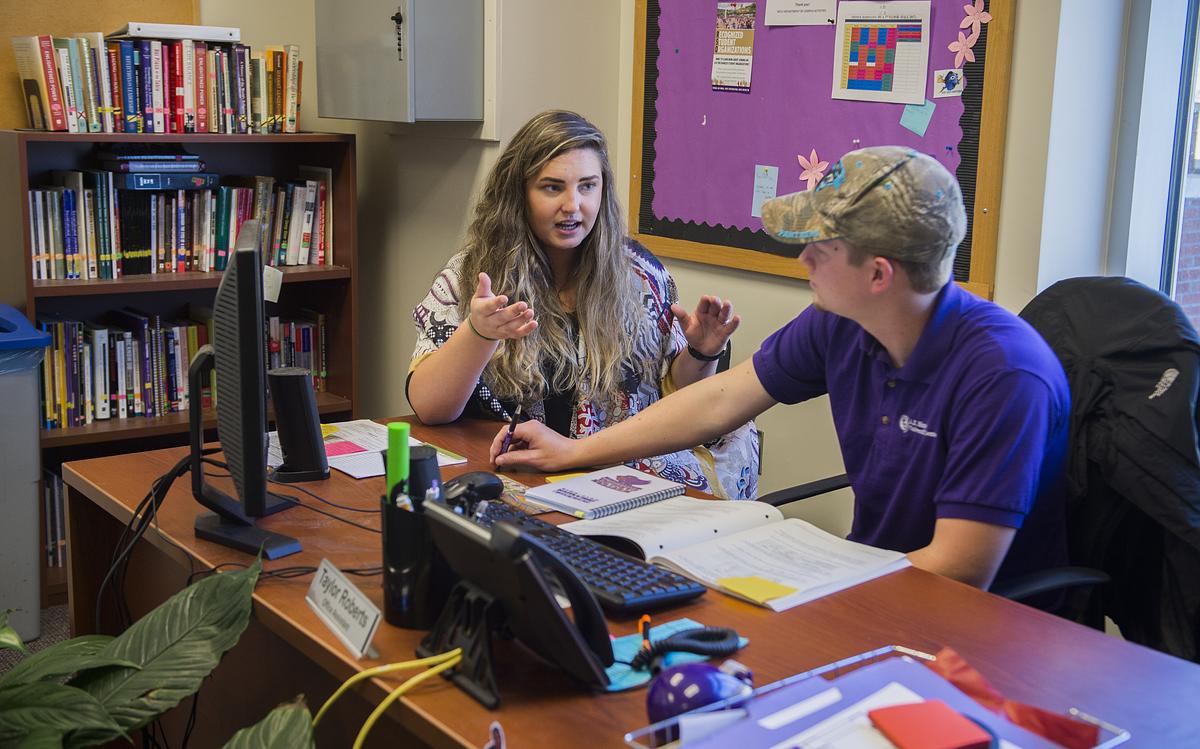
We believe professional experience in tandem with the curriculum is essential for students to be best prepared for their career. Therefore, all full-time students are guaranteed a paid graduate assistantship while they are in the program. All part-time students should already be working full-time in higher education (or in an adjacent field).
What’s Happening

Interested in This Program?

Get In Touch
